|
|
|
|
|
|
|
|
|
Canberra The English Electric Canberra first flew on Friday 13 May 1949 when its performance created a sensation. Such was the quality of the original design that in May 1951, when the first B2 Canberras entered service with No 101 Squadron at RAF Binbrook they could out manoeuvre all the fighters of the period and fly with impunity more than 10,000 feet above them. Operated by 17 airforces in more than 20 different variants, Canberras have been to war at Suez and in India, in Vietnam and the Falklands campaign, and in 1996 Canberra PR9s were engaged in operational reconnaissance flights over Bosnia and in other regions. It is widely and justifiably regarded as one of the greatest aircraft designs of all time. |
| Canberra Aviation Art Prints, Paintings and Drawings WW1 Aviation Art |
|
|
|
|
|
| Text for the above items : |
Musketeer Canberras by Ivan Berryman. The Suez conflict of 1956 necessitated a large deployment of bombers from the RAF's new fleet of jets. 24 Vickers Valiants and 29 English Electric Canberras operated out of Luqa, together with a further 59 of the type flying from bases in Nicosia and Cyprus under the codename Operation Musketeer. Adorned in the theatre's black and yellow identification stripes, two XV Sqn Canberras are depicted here on a bombing mission to attack Egyptian airfields in October 1956. The squadron flew a total of 37 missions during the Suez crisis, its aircraft dropping more bombs than any other Canberra squadron. |
The Marham Wing Over Sandringham by Michael Rondot. At the beginning of her Golden Jubilee Year, Her Majesty Queen Elizabeth II visited Royal Air Force Marham, the Norfolk airbase close to the Royal familys winter residence at Sandringham. RAF Marham personnel are very proud of their unique association with Her Majesty who became Honorary Air Commodore of the station in 1976. To mark the occasion of her Golden Jubilee Year this magnificent oil painting was commissioned by all ranks of RAF Marham and presented to Her Majesty. The aircraft in Michael Rondots painting represent the five squadrons of The Marham Wing, formed in August 2001 to become the Royal Air Forces largest and most potent fast-jet main operating base. A Canberra PR9 is portrayed leading four Tornado GR4s, one from each squadron with aircraft tail letters specially marked to spell E II R L for the Queens Golden Jubilee, in a formation flown over Sandringham House in Her Majestys honour. In the background, surrounded by beautiful wooded grounds, lawned gardens and 20,000 acres of estate, stands the fine red brick and sandstone house built in 1870 for Prince Edward (later King Edward VII) and Princess Alexandra. |
English Electric (BAC) Canberra by Keith Woodcock. No text for this item |
Canberra Tribute by Michael Rondot. Operated by 17 airforces in more than 20 different variants, Canberras have been to war at Suez and in India, in Vietnam and the Falklands campaign, and in 1996 Canberra PR9s were engaged in operational reconnaissance flights over Bosnia and in other regions. It is widely and justifiably regarded as one of the greatest aircraft designs of all time. The English Electric Canberra first flew on Friday 13 May 1949 when its performance created a sensation. Such was the quality of the original design that in May 1951, when the first B2 Canberras entered service with No 101 Squadron at RAF Binbrook they could out manoeuvre all the fighters of the period and fly with impunity more than 10,000 feet above them. Operated by 17 airforces in more than 20 different variants, Canberras have been to war at Suez and in India, in Vietnam and the Falklands campaign, and in 1996 Canberra PR9s were engaged in operational reconnaissance flights over Bosnia and in other regions. It is widely and justifiably regarded as one of the greatest aircraft designs of all time. |
Canberras Over Cambridgeshire by Robert Taylor. Undeterred by Friday 13th, Wing Commander Beamont took off that day in May 1949, in the Canberra prototype. So accomplished was this new jet bomber that by the end of the 1950s, no fewer than 41 R.A.F. Squadrons were equipped with the Canberra, and the training of crews in another 16 countries had begun. Robert Taylors painting, shows the aircraft during a formation training sortie, rushing over the fenlands of Cambridgeshire, England, preparing to land at its R.A.F. Wyton base. |
| Canberra Pilot and aircrew signature details |
  Wing Commander Roland Bee Beamont CBE DSO DFC DL Our estimated value of this signature : £65 Died : 2001 | Wing Commander Roland Bee Beamont CBE DSO DFC DL One of World War IIs great characters, Bee flew Hurricanes with 87 Squadron, later leading a Tempest Wing. He had 8 victories plus a further 32 VIs destroyed. After the war he became a highly respected Chief Test Pilot.Wing Commander Roland Beamont, one of the RAFs top buzz bomb interceptors, was born in Enfield England on August 10, 1920. Educated at Eastborne College, Beamont accepted a short service commission with the Royal Air Force in 1938. He commenced flying in 1939 at the the No. 13 Reserve Flying School at White Waltham. His initial duty was with the Group Fighter Pool at St. Athan where he learned to fly the Hurricane. Beamont was soon posted with the No. 87 Squadron which was part of the Advanced Air Striking Force in France. Seeing action in both France and Belgium prior to the Allied withdrawl, Beamont rejoined 87 Squadron in England during the Battle of Britain. In the spring of 1941 Beamont was awarded the Distinguished Flying Cross after destroying five enemy aircraft. As Commanding Officer of 609 Squadron, Beamont pioneered both day and night ground attack missions utilizing the Typhoon. Beamont was credited with destroying 25 trains in a three month period. He was then made responsible for organizing and commanding the first Tempest Wing at Newchurch. Three days after D-Day Bearnont shot down an Me-109, marking the first aerial combat victory for the Hawker Tempest. In the summer of 1944 Beamont destroyed 32 buzz bombs prior to leading his wing to a Dutch Airfield at Volkel on the Continent. In October of 1944 Beamont was shot down during a ground attack mission over Germany, and he remained a prisoner of war until wars end. Following repatriation Beamont became an experimental test pilot with the Gloster Aircraft Company, which had developed the RAFs first jet aircraft. Turning down a permanent commission with the RAF, Beamont then joined English Electric Company in Wharton as the Chief Test Pilot for the B3/45 (Canberra) jet bomber program. He managed all prototype testing on the Canberra, and in the process set two Atlantic speed records. Later Beamont was involved with the supersonic P1/Lightning program, and became the first British pilot to fly at twice the speed of sound. From 1965 until 1970 he was a founding member of Britains highly succesful Saudi Arabian export program. For several years prior to his retirement in 1979, Beamont was Director of Operations for British Aerospace and Panavia where he was in charge of flight testing for the Tornado. Since his retirement Beamont has authored nine books, and published numerous magazine articles. He is a Fellow of the Royal Aeronautical Scociety and an Honorary Fellow of the Society of Experimental Test Pilots in America. He died 19th November 2001. |
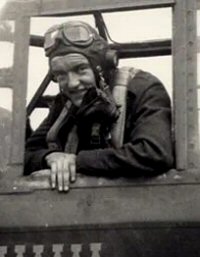  Flt Lt Don Briggs DFM Our estimated value of this signature : £45 Died : 2018 | Flt Lt Don Briggs DFM Don Briggs spent two years at RAF Halton qualifying as an engine fitter before serving on RAF flying units until he volunteered in December 1943 for the new aircrew trade of Flight Engineer. After a period of training he joined No.156 Squadron equipped with the Lancaster. The unit was part of Bomber Command's Pathfinder Force. The flight engineer was the pilot's mate who managed the engines, fuel systems and the ancillary equipment. He teamed up with Flying Officer Bill Neale and they were to complete sixty-two bombing operations together. Their first sortie was on June 11th, 1944 when Bomber Command was attacking targets in support of the Allied landings in Normandy. Railway marshalling yards, supply dumps and construction sites for the V-1 flying bombs and storage sites for the V-2 rocket were their primary targets. By late August, Bomber Command resumed its campaign against the industrial cities in Germany and Briggs attacked Russelheim, Kiel, Stettin and cities in the Ruhr. His crew marked targets with flares to allow the main force to mount accurate attacks. After the war, Briggs flew long-range transport sorties in York aircraft (based on the Lancaster) before spending three years at the Empire Test Pilot's School at Farnborough. In July 1951 he started training as a pilot and, after converting to jets, he joined the newly-formed No.10 Squadron to fly the twin-engine Canberra bomber. In August 1955 he trained on the first of the RAF's V-bombers, the Valiant. He joined the first squadron, No.138, and a year later he transferred to No.49 Squadron, which was being formed for the task of conducting the nuclear weapons trials in the Pacific. Operation Grapple was mounted in 1957 to test Britain's first thermonuclear megaton weapon, the Hydrogen Bomb. The site chosen for the test was Malden Island 400 miles south of Christmas Island in the South Pacific. Briggs was the second pilot in the crew of Squadron Leader Arthur Steele. They flew their Valiant bomber to the newly constructed airfield on March 18, 1957 and began a period of intensive training. On May 15th, No.49 Sqn's commanding officer, Wing Commander Ken Hubbard, dropped the first weapon successfully. For the second drop on May 31st, Steele, Briggs and their crew flew the reserve aircraft and for the third and final test, they were tasked for the sortie. On June 19th, they took off and climbed to 45,000 feet, and carried out a practice run over the target before clearance to drop the bomb was given. Fifty seconds after release, the bomb exploded at the pre-determined height of 8,000 feet. Steele and Briggs had erected the anti-flash screens in the cockpit of their aircraft before making a precisely executed turn away from the explosion and before the shock wave was felt in the aircraft. The drop was completely successful. A few days after their flight, the squadron returned to Wittering. By the end of the year, Briggs had completed a Valiant captain's course and he transferred to No.138 Squadron where he spent the next three years. This was followed by almost three years as a pilot instructor on Valiants and it was during this period he also converted to the Victor bomber. In 1964 he trained as a flying instructor and spent three years instructing trainee pilots at an RAF flying school near Newark. In January 1967 he converted to the third of the RAF's V-bombers, the Vulcan, and was to spend the next five years as an instructor on the iconic delta-wing aircraft before joining No 9 Squadron shortly before it moved to its new base in Cyprus. After 34 years service, he retired at the end of 1973. There were 88 Vulcan 2s produced and Briggs flew 57 of them during his seven years with the force. He spent 15 years at the Oxford Air Training School training pupils to become commercial airline pilots. He retired aged 65 when he joined the RAF Microlight Association at Halton where his RAF career had begun and where he became the chief flying instructor. Finally, at the age of 84 he decided to finish his flying career having flown 71 different types of aircraft and gliders. He died in July 2018. |
Squadron Leader A M Charlesworth DFC Our estimated value of this signature : £25 | Squadron Leader A M Charlesworth DFC Joined the RAF straight from school just before his 18th birthday in the summer of 1940 with the sole purpose of becoming a fighter pilot. After training, at age just 18, he was posted to RAF Ibsley, Hampshire, to 118 Sqdn, flying Spitfire 2Bs. Here he took part in his first scramble. After a month he was posted where the action was thickest, to a 11 Group Station, RAF Kenley, where he joined 602 Sqdn. His Squadron Commander was Al Deere, by this time a highly decorated ace; Al was 23 then and had already been shot down nine times. 602 Squadron was equipped with the more advanced Spitfire VBs which had two 20mm cannons, firing at 1200 rounds a minute, plus four very useful Browning 50mm machine guns firing at an even higher rate per minute. Al Deere was eventually posted to another squadron and Paddy Finucane took over - 'possibly the finest fighter pilot I came across', Max. Charlesworth continues, 'I remember him trying to get his 21st victory before his birthday and I often flew No. 2 to him. These were twitchy and tiring days when three sweeps a over occupied France day were the norm, to be met each time by several hundred Me 109s and Focke Wolf 190s, at our maximum range, where hectic dog fights ensued. We were normally outnumbered and a day could last from an early morning call at 3.30am to the last landing at 10.30pm in the semi-dark of the long summer of 1941. The average age of the approximately 30 pilots on the squadron was always about 19.' During this period they were scrambled to search for and attack the German battleships Scharnhorst and Gneisenau (although they did not know it at the time) which, with escorting vessels had slipped up the Channel from Brest. The weather was awful and Max flew straight across the German battle cruiser Hipper thinking it was a Royal Navy cruiser. The Hipper opened up at Max with guns blazing but he was fortunate to escape with just a hole in one wing. In April 1942 Max was posted to a secret unit called MSFU (Merchant Service Fighter Unit) where he flew Hurricanes from catapults on merchant ships attached to convoys of anything up to fifty merchant men a time. The ships were mainly bringing supplies from America and taking them to Murmansk and Archangel, the hard-pressed Soviets and Gibraltar. Max recalls this as a highly physical and uncomfortable task, apart from also being very scary. The ships were constantly attacked by U Boat packs and aircraft. When they were in range of the latter, if they launched the Hurricane they knew they would ultimately have to bail out and hope to be picked up by either a friendly escort vessel or a sunken ships lifeboat. 'The North Atlantic route to Canada, north of Iceland and down the Greenland coast at an average sped of six knots in appalling seas was not our idea of a holiday cruise', Max vividly recalls. Having survived this posting Max was then moved to 124 Sq. at West Malting, Near Maidstone, Kent. The squadron was equipped with the much more powerful Spitfire IXs. Their task here was mainly escorting USAF and RAF bombing raids into Europe. With longrange tanks fitted they were able to reach Hamburg and Ludwigshafen; later on they were able to refuel from liberated bases in France. These ops. required them to fly as Top Cover at over 30,000 feet for up to three hours, where it was so cold the pilots returned to base hardly able to climb out of their cockpits. On February 9th 1945 Max was the Senior Flight Commander on 124 Squadron during their move to Cottishall. Here they adapted the Spitfire Ks to dive-bombing. The Spitfires carried either a 500lb. bomb under the fuselage and two 250lbs. under each wing or, a 90-gallon fuel tank under the fuselage and a 250lb. bomb under each wing. Their mission was to destroy V2 sites in Holland - mainly situated in small parks near the centre of the Hague. These V2 sites were launching rockets on London in ever increasing numbers. As well as attacking the V2 sites they were to destroy railway lines used by the Germans to transport V2s into the area. These were dangerous times as the V2s sites were heavily defended by 88mm guns down to 20mm. 'The flak was horrendous and we lost many' recalls Max. As Senior Flight Commander, Max often led the squadron, though identifying targets from 12,000 feet was difficult. After the war Max was one of the first pilots to convert to the Meteor twin-engined jet, later to move on to Vampires and Canberras. His flying career was completed in June 1961 when he was posted to Warsaw, Poland as the Assistant Air Attache. He finally retired from the RAF in 1966. |
Wing Commander Mac England DFC Our estimated value of this signature : £55 | Wing Commander Mac England DFC 'Mac' England joined the RAF in 1938 and after qualifying, posted as a pilot into Lancasters. In 1941 he was transferred from Bomber command to fighter Command-flying Spitfires on coastal sweeps. After a short period of time on Spitfires he was transferred back again to bomber Command, and in 1943 completed 30 Operations on Lancasters. When he retired in 1974 he had flown a total of 36 different aircraft including Hunters and Canberras. |
Squadron Leader Dick Haven Our estimated value of this signature : £25 | Squadron Leader Dick Haven Joining the RAF in 1951 he was a pilot on Canberras, Valiants and Vulcan B.2s serving with 27, 12, 101, 44, 9 and 35 Squadrons including time as Chief Flying Instructor. |
Commander David Hobbs MBE RN Our estimated value of this signature : £10 | Commander David Hobbs MBE RN Commander David Hobbs MBE RN joined the Royal Navy in 1964 and since qualifying as a pilot, flew both fixed and rotary wing aircraft 'to the deck', including Gannet AEW aircraft, Wessex Commando helicopters and Canberra ECCM aircraft. He has served on the aircraft carriers, Victorious, Centaur, Hermes, Bulwark, Albion and two Ark Royals (the 1955 and 1985 ships) with 849, 845, 846 Naval Air Squadrons and 360 RN/RAF Joint Squadron. While serving in the Director General Aircraft (Naval) Department, he was responsible for developing the visual and electronic recovery aids for the Sea Harrier. He also organised the flying trials that cleared the Invincible class and Hermes to operate the modern generation of aircraft at sea.He has been Curator and Deputy Director of the Fleet Air Arm Museum at RNAS Yeovilton since leaving the active list of the Royal Navy in 1998. After a lifetime interest in naval history, he is the author of numerous books, contributes regularly to a variety of international publications and has presented papers at naval historical symposia in Australia, France, New Zealand, the United States and Great Britain. He is an adviser to the naval Staff on a range of aircraft carrier matters. |
Squadron Leader Malcolm Laidlay DFC Our estimated value of this signature : £30 | Squadron Leader Malcolm Laidlay DFC Malcolm Laidlay joined the RAF in 1942 and trained in Canada. After volunteering to fly gliders, he was posted to India in 1944 and flew Hadrians; subsequently, during the Burma campaign, he flew Sentinel L.5s and also took part in supply-dropping from Dakotas. Demobilized in 1947, he rejoined the RAF in 1949. In 1950 he was posted to Hong Kong and detached to Japan, flying Sunderland flying boats on operations around Korea; later, his squadron was re-located to Singapore where he took part in operations over Malaysia. After flying Canberras as a flight commander in Cyprus in 1957/58, he then participated in the 'Intensive Flying Trials' for the MkII Vulcan at RAF Waddington. In 1961 he joined 101 Vulcan Squadron as a flight commander and, after participating in a ten-day, 24hr airborne alert flight-refuelled trial, he took part (in 1963) in 'Exercise Walkabout', the 18hr non-stop flight-refuelled flight of three Vulcan's from RAF Waddington to Perth (Australia). After leaving the RAF in 1976, he joined the Civil Service and retired in 1989. |
Group Captain Drane Lowe, CBE DFC AFC Our estimated value of this signature : £45 | Group Captain Drane Lowe, CBE DFC AFC Joining the RAF in August 1935 he completed pilot training and was posted to 49 Sqn flying Hawker Hinds as a light bomber. At the outbreak of war he took part in the early bombing raids over France, flying Hampdens and then Wellingtons on missions over occupied Europe. Fully operational until mid 1941, he was then posted to OTU at Cottesmore and Finningley as an instructor. After a long and distinguished career, including a spell flying Canberras, he retired from the RAF in 1965. We know he died before January 2018. |
Flight Lieutenant Rusty Russell Our estimated value of this signature : £35 | Flight Lieutenant Rusty Russell Serving with 31 Sqn on Photo Reconnaissance on Canberras he later moved to 230 OCU and 35 Sqn flying Vulcan B.2s and was a Captain at the height of the Cold War. |
Group Captain Dave Seward AFC Our estimated value of this signature : £10 | Group Captain Dave Seward AFC Dave Seward flew RAF Meteors, Canberras and Javelins and USAF F-86, F-102 and F-106 fighters. In 1961, as C.O. of No.56 Sqn he led the 'Firebirds' Lightning aerobatic team and later Commanded the Lightning OCU and Battle of Britain Flight, flying the Lancaster, Hurricane and Spitfire. |
H. E. Tappin Our estimated value of this signature : £55 Died : 2007 | H. E. Tappin Started flying, as an N.C.O. pilot, with the R.A.F.V.R. at No.3 E.& R.F.T.S. run by Air Service Training, at Hamble near Southampton.in April 1937. Awarded Pilot's Flying Badge (wings) in May 1938. Moved to 26 E.& R.F.T.S. run by Marshalls Flying School at Kidlington, near Oxford in September 1938. Flying Instructor's Course, November/December 1938 Started instructing 30th December 1938. School at-Kidlington closed on outbreak of hostilities, staff moved to 22 E.F.T.S. at Carpbridge. Instructed at Cambridge until April 1941, when posted to 52 O.T.U. (Hurricane) at Debden. Commissioned December 1940. 52 O.T.U. April/May 1941. Posted to 3 Squadron (Hurricane) at Martlesham Heath 2nd June 1941, became Flight Commander in March 1942. Posted to 534 Squadron (Turbinlite) as Hurricane Flight Commander September 1942. Tutbinlite Project abandoned February 1943,,posted to 157 Squadron (Mosquito) at Castle Camps. Became Flight Commander July 1943. Posted from 157 at Predannack, March 1944 to 51 O.T.U. at Cranfield and Twinwood Farm, near Bedford, as W/Cdr Flying. January 1945 posted to Mediterranean to command 108 Squadron (Beaufighter), to learn on arrival that the Squadron was to be disbanded. I spent a short period with 334 (Special Duties) Wing at Brindisi, in Southern Italy, and in March 1945 was posted to Command 256 Squaron (Mosquito) with the Desert Air Force at Forli, iii-Northern Italy. In September 1945 the Squadron moved to Egypt,, from where I returned home in December of that year. In February 1946 1 returned to Cambridge to continue my work with Marshalls as a civilian pilot, where the work was varied and interesting, covering flying-instruction, charter work and testflying on a variety of aircraft, including the Vampire, Venom, Canberra, Valiant, Viscount and Ambassador. I left Cambridge in January 1961 to instruct at The College of Air Training at Hamble, which had been set up by B.E.A. and B.O.A.C., (taking over the Air Service Training facilities) to train new pilots ?,rom scratch, as the supply of ex-service pilots was running short. It proved to be very successful. Retired from Hamble January 1972. Service Numbers: N.C.O. 740167. Commissioned Officer 89304. D.F.C. September 1942 Bar to D.F.C. April 1944. Died 8th January 2007. |
Air Commodore Roger Topp AFC 2 bars Our estimated value of this signature : £15 | Air Commodore Roger Topp AFC 2 bars Commanded Royal Air Force Coltishall. Commandant of the Aircraft & Armament Experimental Establishment, Boscome Down. Commanding Officer and acrobatic team leader of No. 111 Squadron joined the R.A.F. in 1943 and learned to fly in Canada. When he returned, to England in 1944 there was a surplus of powered aircraft pilots so he transferred to the Glider Pilot Regiment. On March 2, 1945, he flew a Horsa glider carrying jeep, guns and troops in the airborne crossing of the Rhine. In 1947 he joined No.98 Squadron, flying Mosquitos in Germany, becoming a flight commander and instrument flying examiner for his Wing. He was awarded the Air Force Cross in 1950. In that year he took the course at the Empire Test Pilots School, and remained at Farnborough on the staff of the Royal Aircraft Establishment. He undertook flying tests of various experimental armament installations, including guided weapons and the new 30 mm. Aden gun, four of which formed the Hunters armament. He was a leading acrobatic demonstration pilot on the Canberra twin-jet bomber, flying before the Emperor of Ethiopia and the Shah of Persia during their visits to Britain. In 1954, with another pilot, Squadron Leader Topp shared the 100 hours intensive flight testing of the Comet jet air liner undertaken from Farnborough. He was awarded a Bar to the A.F.C. in 1955 and a second Bar in January 1958 for work with the acrobatic team. |
Wing Commander Ken Wallis Our estimated value of this signature : £50 Died : 2013 | Wing Commander Ken Wallis Kenneth Horatio Wallis was born on April 26 1916 at Ely, Cambridgeshire, where his father ran a cycle and motorcycle shop, and was educated at The Kings School. Kenneth had limited vision in his right eye and as a child wore an eye patch and in 1936 this defect led to his rejection by the RAF. Undeterred, he paid £14 to obtain a private flying licence which required only a certificate signed by his GP, obtaining the licence after just 12 hours flying a Gypsy Moth. Having failed another test for the RAF in 1938, when he tried again after the outbreak of war Wallis decided to cheat. While the doctors back was turned, he sneaked a look with his good eye at the bottom line of letters on the test chart and passed. After flying Westland Lysander patrols with No 268 Squadron, in 1941 Wallis transferred to Bomber Command, flying Wellingtons with No 103 Squadron, based at RAF Elsham Wolds in north Lincolnshire, attacking heavily defended targets in the Ruhr. Though he survived 28 missions over cities in Germany he gained something of a reputation for being accident prone, earning the nickname Crasher. Returning from Frankfurt in September 1941, Wallis found his airfield blanketed by fog. He made a number of abortive attempts to land but, with his fuel tanks almost dry, he climbed to allow his crew to bail out. After they had done so, his parachute snagged on his seat - he finally got clear at very low level, and his parachute opened only seconds before he hit the ground. After a tour as a bombing instructor, Wallis left for Italy and flew bombing operations with No 37 Squadron. Having survived another crash when his aircraft was struck by lightning, he applied to fly Mosquito bombers at night - a mistake, as it meant that his night vision was tested. All hell let loose - You have been flying with a bomber crew and you cant see properly! he recalled being told. But the RAF ophthalmologist was more positive. He said, Wallis, I would rather have a man with a bit of fire in his belly who wants to fly than some of the perfect specimens I get here who do not. Wallis remained in the post-war RAF and specialised as an armament officer, among other things solving the problems of loading bombs efficiently on to the RAFs first jet bomber, the Canberra, and testing the Mach 2 – later known as the Lightning. During a two-year posting to the USAFs Strategic Air Command armament and electronics division in the 1950s, he flew B-36s laden with nuclear bombs over the North Pole and participated in powerboat races in vessels that he made from redundant parts, winning the 56-mile Missouri Marathon. He also set about building his first autogyro. He returned to Britain to be the Command Armament Officer at Fighter Command. Wallis demonstrated his autogyros at numerous RAF air shows before leaving the RAF in 1964 in the rank of wing commander. He moved to Norfolk, hoping that he would be able to put them into commercial production for reconnaissance, research and development, surveillance and military purposes. But it never happened. Instead, during the 1970s, he worked with a company that pioneered a type of multi-spectral aerial photography that could detect where bodies were buried, as a result of which he was called in to help in several high-profile missing-person searches. He also flew an autogyro at 18,976ft without oxygen; became the oldest pilot to set a world record when, aged 81, he accidentally achieved the fastest climb to 3,000ft, in seven minutes 20 seconds; and he set a world speed record for an autogyro of 129.1mph at the age of 89. kenneth Wallis never found a commercial manufacturer for his autogyros, although he was delighted when the James Bond film producer Cubby Broccoli recognised its dramatic potential: Wallis and his autogyro, Little Nellie, were duly dispatched to the set of You Only Live Twice, where Wallis stood in for Sean Connery in a famous sequence in which Bond, in a rocket-firing autogyro, fights baddies in orthodox helicopters, zipping around an active volcano - Wallis received many national and international awards, was appointed MBE in 1996. Wing Commander Kenneth Wallis, born April 26 1916, died September 1 2013. |
| Canberra Squadron details |
No.10 Sqn RAF Country : UK Known Codes : , ZA, PB, | No.10 Sqn RAF Rem acu tangere - To hit the mark
|
No.100 Sqn RAF Country : UK Known Codes : , AS, FZ, HJ, HW, NK, RA, | No.100 Sqn RAF Sarang tebuan jangan dijolok - Never stir up a hornets nest |
No.101 Sqn RAF Country : UK Known Codes : , SR, LU, MW, | No.101 Sqn RAF Mens agitat molem - Mind over matter |
No.102 Sqn RAF Country : UK Disbanded 27th April 1963 Known Codes : , DY, EF, TQ, | No.102 Sqn RAF Ceylon Tentate et perficite - Attempt and achieve |
No.115 Sqn RAF Country : UK Disbanded October 1993 Known Codes : , A4, BK, IL, KO, | No.115 Sqn RAF Despite the elements |
No.13 Sqn RAF Country : UK Known Codes : , AN, OO, | No.13 Sqn RAF Adjuvamus tuendo - We assist by watching |
No.139 Sqn RAF Country : UK reformed again at RAF Wittering on 1 January 1962 with the Handley Page Victor B2, before it was finally disbanded on 31 December 1968. Known Codes : , XD, DX, GB, SY, | No.139 Sqn RAF Jamaica Si placet necamus - We destroy at will |
No.15 Sqn RAF Country : UK Known Codes : , LS, DJ, EF, QR, ZA, | No.15 Sqn RAF Aim sure |
No.31 Sqn RAF Country : UK Known Codes : , CB, 5D, EE, ZA, | No.31 Sqn RAF In caelum indicum primus - First into Indian skies |
No.540 Sqn RAF Country : UK Disbanded 31st March 1956 Known Codes : , DH, | No.540 Sqn RAF Sine qua non - Indispensable |
No.7 Sqn RAF Country : UK Known Codes : , MG, LT, XU, | No.7 Sqn RAF Per diem per noctem - By day and by night |
No.80 Sqn RAF Country : UK Disbanded 28th September 1960 Known Codes : , W2, AP, EY, GK, YK, | No.80 Sqn RAF Nil nobis obstare potest - Nothing can stop us |
|
Contact Details |
|
Sign Up To Our Newsletter!
This website is owned by Cranston Fine Arts. Torwood House, Torwoodhill Road, Rhu, Helensburgh, Scotland, G848LE Contact: Tel: (+44) (0) 1436 820269. Email: cranstonorders -at- outlook.com
|
 |





