|
|
|
|
|
|
|
|
|
Phantom The McDonnell Douglas F-4 Phantom II is a tandem two-seat, twin-engined, all-weather, long-range supersonic jet interceptor fighter/fighter-bomber produced for the U.S. Navy by Mcdonnell Douglas. It became a major part of the United States Navy, Marine Corps and American Air Force. The Phantom F-4 saw service with all American forces during the Vietnam war serving as a fighter and ground attack aircraft. The Phantom first saw service in 1960 but continued in service until the 1980’s (being replaced by the F-15 and F-16 ) The last Phantoms saw service during the Gulf war in 1991 being used for reconnaissance. Other nations also used the Phantom to great success. The Israeli Air Force used them during various Arab-Israeli wars and the Phantom also saw service in the Iranian Air Force during the Iran Iraq War. Phantom production ran from 1958 to 1981, with a total of 5,195 built. The Royal Air Force and the Fleet Air Arm of the Royal Navy flew versions based on the F-4. The British Phantoms were powered by Rolls Royce Spey engines and also received British avionics, under the names pf Phantom FG.1 and Phantom FGR.2. The last British Phantoms served with 74 Squadron until they were dispanded in 1992. |
| Phantom Aviation Art Prints, Paintings and Drawings WW1 Aviation Art |
| Navigation | |
| Page 2 of 2 | Previous .. Page 2 |
|
|
|
|
|
|
|
|
|
| Navigation | |
| Page 2 of 2 | Previous .. Page 2 |
| Text for the above items : |
Screaming Eagle by Philip West. Having put an AIM-9 missile up the tailpipe of a MiG-17 over North Vietnam, pilot Jerry Devil Houston with Kevin Moore riding shotgun, swings his F-4B Phantom onto the center-line of the USS Coral Sea following a strike mission gainst the airfield at Bai Thuong on May 6, 1972. The brightly painted stylistic eagle denotes they are flying the CAG bird. |
Silver Kite 211 by Philip West. 10th May 1972. Lt. Curt Dose together with his RIO, LCDR Jim McDevitt line up their F-4J Phantom prior to landing on the USS Constellation following their first successful target CAP of the day. During this mission they claimed a MiG-21F after a ultra-low level supersonic flight over the North Vietnamese airfield of Kep, northeast of Hanoi. |
Phantom Farewell by Michael Rondot. Old fighters never die and they dont fade away either. They live on in the hearts and minds of aircrews, groundcrews and enthusiasts alike. The F-4 Phantom may have reached the end of its front-line service with the RAF but the legend will live on for the big, powerful, beautifully ugly fighter. Revered by its aircrew for both its performance and firepower, the Phantom may be the last fighter-pilots fighter to have seen service with the RAF. Whether flying low-level combat air patrols over Germany, defending the Falkland Islands, or just simply chewing up the Tornado F3s and spitting out the remains over the North Sea, the Phantom has seen it all and done it all. |
Israeli F-4 Phantom II Aces. The American manufactured F-4 Phantom II was used by the Israelis in air-to-ground missions, as an attack aircraft, and air-to-air missions as a fighter. Despite performing both roles with equal success the Israeli reliance on the Mirage III and Nesher delta fighters meant that the F-4 was used most regularly in its air-to-ground role. The kill total of the Israeli F-4 community was, consequently, a modest 116.5; significantly lower than that of other Israeli aircraft types in service between 1969 and 1982. A handful of aces were, nevertheless, created and, using first hand accounts, this unique book tells their stories. Many F-4 pilots had previously flown the Mirage III but most of the navigators were either inexperienced flying school graduates or had been transferred from transport aircraft. The decision to create such teams may have appeared an odd one and it certainly led to a number of interesting experiences but proved, ultimately, to be so successful that by 2010 the Israeli air force will have more two-seat combat aircraft than single-seat fighters. The F-4 experience was, therefore, crucial to moulding the future of the Israeli air force. |
Phantom Showtime by Robert Taylor Irish and I came into the break smoking at 500 knots, below the level of the flight deck. I could see thousands of men watching from the catwalks. I made a six-G break turn with 90 degree angle of bank. We landed after one of my best passes of the cruise. - Commander Randy Duke Cunningham. Back on deck, first to shake the hands of Lt.Randy Cunningham and his Radar Intercept Officer, Lt (jg) Willie Irish Driscoll, was ordnancement Willie White: Mr. Cunningham, we got our MiG today, didn't we! It was January 19, 1972 aboard the USS Constellation in the Gulf of Tonkin. As Cunningham shut down the engines of his Fighting Falcons F-4J Phantom, Task Force 77 Commander Admiral Cooper congratulated Cunningham and Driscoll on achieving their first of five air victories They went on to become the US Navys only Aces of the Vietnam war. |
Tigers Roar by Robert Tomlin. This limited edition print is a reminder of the heady days when the McDonnell Douglas Phantom reigned supreme. Still the definitive Mans Aircraft, its brute force and clinical efficiency are legend. The Phantom was loved by its pilots without exception and still held dear by all who flew in her and had contact with her. Preserved at Duxford in the UK by the Old Flying Machine Company, this aircraft is still resplendent in the 74 Tiger Squadron markings. The print shows the machine blasting off from the runway of RAF Valley during a typical detachment. |
Phantom Strike by Robert Taylor. Supplied with companion print Wolfpack Leader. |
Phantom Launch by Robert Taylor. SOLD OUT. |
Flight of the Phantom by Stan Stokes. The McDonnel Douglas F-4 Phantom II was flown by both the USN and USAF in Vietnam. The aircraft was utilized in many roles during the War. The only two aces in Vietnam both flew the F-4. Randall Duke Cunningham did the honors for the Navy, while Steve Ritchie attained five victories flying the Phantom with the USAF. |
| Top Aces for : Phantom | ||
| A list of all Aces from our database who are known to have flown this aircraft. A profile page is available by clicking the pilots name. | ||
| Name | Victories | Info |
| Marion Eugene Carl | 18.50 | The signature of Marion Eugene Carl features on some of our artwork - click here to see what is available. |
| Robin Olds | 13.00 | The signature of Robin Olds features on some of our artwork - click here to see what is available. |
| Randall H Cunningham | 5.00 | The signature of Randall H Cunningham features on some of our artwork - click here to see what is available. |
| Willie Driscoll | 5.00 | The signature of Willie Driscoll features on some of our artwork - click here to see what is available. |
| Richard 'Steve' Ritchie | 5.00 | The signature of Richard 'Steve' Ritchie features on some of our artwork - click here to see what is available. |
| Phantom Pilot and aircrew signature details |
 Brigadier General Yoram Agmon Our estimated value of this signature : £10 | Brigadier General Yoram Agmon An Ace with 6 ictories in total, 2 in the Mirage and 4 in the Phantom, he gained the IAFs first ever kill in the Mirage and the world's first victory over a MiG21. |
Air Chief Marshal Sir John Allison Our estimated value of this signature : £10 | Air Chief Marshal Sir John Allison Joined the Royal Air Force in 1961 and trained as a pilot. His first two tours were on Lightnings, but in 1970 he was posted to fly Phantoms as an Exchange Officer with the United States Air Force. Thus began his relationship with the main aircraft of his career, a relationship that only finished when the Phantom was retired from Royal Air Force service in 1992. Indeed, he made the last Phantom flight in the RAF when he delivered XV497 to RAF Coningsby. That aircraft is now preserved at RAF Waddington. Also in 1992, he led the Queens Birthday Flypast; the chosen formation was a close diamond of sixteen Phantoms, to mark the type's imminent retirement. The aircraft he flew on that occasion, XV474, can be seen at the Imperial War Museum's airfield at Duxford. Sir John ended his career as the Commaner-in-Chief of Strike Command, retiring in 1999. |
 Brigadier General Itzchak Amitay Our estimated value of this signature : £10 | Brigadier General Itzchak Amitay Credited with 5 victories in the F-4 Phantom, including 3 in one day, he was only the third Navigator to become an Ace in the Phantom with the IAF. |
 Brigadier General Abraham Ashael Our estimated value of this signature : £10 | Brigadier General Abraham Ashael Credited with 2 victories in the F-4 whilst flying with pilot Meir Shani, he later became a PoW after being shot down and wounded, losing a leg. |
 Brigadier General Uri Bakal Our estimated value of this signature : £10 | Brigadier General Uri Bakal Whilst flying the Phantom he was on one occasion forced to eject after suffering a direct hit during a mission but managed to make it back to Israeli lines. |
Brigadier General Moshe Bartov Our estimated value of this signature : £10 | Brigadier General Moshe Bartov He was officially credited with at least one aerial victory whilst flying the Phantom. |
 Major General Avihu Ben-Nun Our estimated value of this signature : £10 | Major General Avihu Ben-Nun He scored at least 4 victories, 2 in the F-4 Phantom and 2 in the Mirage and went on to become the Commanding Officer of the Israeli Air Force between 1987 - 1992. |
 Brigadier General Shamuel Ben-Rom Our estimated value of this signature : £10 | Brigadier General Shamuel Ben-Rom Officially credited with at least 2 victories in the F-4 Phantom, he scored 119 Squadron's first ever aerial victory in the Phantom. |
  Major General Frederick Blesse Our estimated value of this signature : £45 Died : 2012 | Major General Frederick Blesse Major General Frederick C. 'Boots' Blesse, born in 1921 in Colón, Panama Canal Zone, graduated from the United States Military Academy in 1945. His first combat missions in Korea were flown in the P-51 where he completed 67 missions in the Mustang. This was followed by 35 missions flying the F-80 and 121 missions in the F-86. In all he flew 233 combat missions in the Korean conflict achieving 10 aerial victories making him the current leading Ace from that war. He later flew 157 missions in the F-4 in Vietnam. He retired from the USAF in 1975, with more than 6,500 flying hours in fighter-type aircraft and more than 650 hours combat time to his credit. Sadly, Frederick Boots Blesse passed away on 1st November 2012. |
  Major General Marion Carl Our estimated value of this signature : £55 Died : 1998 | Major General Marion Carl Born in Hubbard, Oregon on the 1st ofNovember 1915, Carl learned to fly when he was at college and went solo after only 2 and half hours of instrruction. Marion Carl went to Oregon State College to study engineering and graduated in 1938 as a Lieutenenat in the Army Reserve, but resigned his commission to become a naval aviation cadet and in December 1939 he received his 'wings of gold' and a Marine Corp commission. Marion Carl was posted to (VMF- 1) Marine Fighting Squadron One in Virginia at Quantico. In 1940 he became a instructor to train new pilots for Marine Fighting Squadron 221 (VMF-221 ) at NAS North Island in San Diego, California. When the Japanese attacked Pearl Harbor on the 7th December 1941, Carl's squadron VMF-221 were preparing to embark aboard the USS Saratoga (CV-3) bound for Oahu, Hawaii. Carl along with the rest of the squadron were rushed to Hawaii and became part of the Wake Island Relief Task Force. He was still onboard the carrier Saratoga when the relief force was cancelled, and VMF-221 went to Midway Atoll on Christmas Day. Carl's first combat occured on June 4th 1942 during the Battle of Midway, when 15 of the 25 aircraft of VMF-221 were shot down but, Carl was credited with destroying one enemy aircraft, a Mitsubishi Zero. Carl was reassigned to VMF-223 Marine Fighting Squadron 223 which was commanded by a former squadron mate from VMF-221, Capt. John Smith. On August 20th, VMF-223 was deployed to Guadalcanal and was the first fighter sqaudron ashore with the Cactus Air Force. Between the end of August and the end of October Marion Carl became the Marines' first ace, when Carl had reached 16.5 victories though he was shot down once and was forced to bail out. It is believed Marion Carl was the pilot who shot down the famous Japanese Navy Tainan Kokutai ace Junicho Sasai over Henderson Field. By the end of the war Carl would increase his air victories to 18.5 victories. In 1947 he broke the speed record and in 1953 held the world altitude record. During a second test pilot tour, Carl set an unofficial altitude record of 83,000 feet in the Douglas D-558/II. He was the first pilot to be launched from a carrier by catapult. He had 490 hours in the Phantom I, flying combat recon flights over Red China. Commanding air wings in Vietnam in 1965, he took the First Marine Brigade to Danang, South Vietnam. Despite his seniority, he repeatedly flew combat missions in Helicopter gunships and jet fighters. General Carl received his second star as a Major General in 1967. In 1968 he commanded the 2nd Marine Aircraft Wing at Herry Point until 1970. Subsequently he served as Inpector General of the Marine Corps until retiring in 1973. At that time he had logged some 13,000 flying hours, more than twice as much as most. He flew the F-4 regularly - one of the few Generals to do so. In 1998, on June 28th at age 82, Major General Marion Carl was shot to death with a shotgun during a robbery, defending his wife Edna from a home invader. He was buried with full military honors at Arlington National Cemetary. |
  USAF Gen John T Chain Jr Our estimated value of this signature : £45 Died : 2021 | USAF Gen John T Chain Jr Gen. Chain served for nearly five years as the next-to-last Commanding Officer of the Strategic Air Command. Gen. Chain is a command pilot with 5,000 flying hours, including 400 combat hours. He has flown more than forty-five different military aircraft. He is also a master parachutist with sixty-six jumps to his credit. The General was born December 11, 1934 in Wilmington, Delaware. He attended the Fork Union Military Academy and earned a bachelor of arts degree in history in 1956. He was commissioned as a second lieutenant through the Air Force Reserve Officer Training Corps program, and earned his pilots wings in 1957. General Chain flew F-100s with the 50th Tactical Fighter Wing at Toule-Rosieres Air Base in France, and with the 417th Tactical Fighter Squadron at Ramstein Air Base in Germany. He later served as flight examiner with the 524th Tactical Fighter Squadron at Cannon Air Base in New Mexico. In June of 1964 he was assigned to Ft. Campbell, Kentucky where he served as a forward air controller with the 101st Airborne Division. At Ft. Campbell, the General became a master parachutist and flew 0-1s and F84s. In 1966, he flew combat missions out of Tan Son Nhut in Vietnam as an adviser, prior to being assigned to Washington where he served as an exchange officer with the Dept. of State. In 1971 he graduated from the National War College and concurrently earned a masters degree in international affairs from George Washington University. General Chain returned to combat flying in 1972 when he flew F-4s out of Thailand. He was appointed Deputy Commander of the 35th Tactical Fighter Wing in California upon his return. Later he was transferred to Langley Air Base in Virginia, with the F-15 equipped 1st Tactical Fighter Wing. He served in various capacities and eventually assumed command of the Wing. In 1978 he was promoted to Brigadier General and was the military assistant to the Secretary of the Air Force. General Chain's numerous awards and decorations include the Distinguished Service Medal with oak leaf cluster, the Legion of Merit, the Distinguished Flying Cross with oak leaf clusters, the Bronze Star Medal, the Meritorious Service Medal with two oak leaf clusters, the Air Medal with ten oak leaf clusters, Air Force Commendation Medal, the Air Force Outstanding Unit Award with oak leaf cluster, the Air Force Organizational Excellence Award, the Combat Readiness Medal, the National Defense Service Medal, the Vietnam Service Medal with four stars, the Air Force Longevity Service Award Ribbon with six oak leaf clusters, the Republic Vietnam Distinguished Medal, just to name a few. Sadly John would pass away on July 7th 2021. |
Air Marshal Sir Christopher Coville Our estimated value of this signature : £10 | Air Marshal Sir Christopher Coville Joined the RAF in 1964 as a Flight Cadet at RAF College, Cranwell. Initially serving as a Lightning pilot on 5 Sqn, he later undertook a tour on the Lightning OCU. In 1973 he converted to the F4, serving as a QW1 on 43 Sqn. Upon promotion to Sqn Ldr, he took up a post on the Phantom OCU at RAF Coningsby. Staff tours as the fighter specialist at the CTTO, Staff College and NATO followed before he resumed flying F4s as OC Ops Wing at RAF Stanley in the Falkland Islands. In 1983 he assumed command of RAF Coningsby where he oversaw the conversion of the station from an F4 to a Tornado F3 base. During this same period he also flew the Spitfire and Hurricane aircraft of the Battle of Britain Memorial Flight. Formerly Deputy Commander in Chief Allied Forces North Europe, he is currently Commander in Chief RAF Personnel and Training Command and a member of the Air Force Board as Air Member for Personnel. |
  Commander Randall H Cunningham USN Our estimated value of this signature : £45 | Commander Randall H Cunningham USN After joining the US Navy in 1966, Randy 'Duke' Cunningham went to Vietnam with VF96, flying the McDonnell Douglas F-4 Phantom. He became the conflict's first fighter Ace, and was to become one of the most highly decorated Aces of the war. With his RIO, Willie Driscoll, Duke achieved five victories in Vietnam, including 'three-in-a-day' on 10th May 1972. He later assumed command of the elite Navy Adversary Squadron of the Miramar Top Gun program. Retiring from the Navy, Duke was elected to Congress, where he now serves in the House of Representatives. |
 Lieutenant Colonel Yair David Our estimated value of this signature : £10 | Lieutenant Colonel Yair David He was shot down whilst flying the Phantom but was recovered after a daring Combat Search and Rescue mission. |
 Commander Willie Driscoll USN Our estimated value of this signature : £20 | Commander Willie Driscoll USN Willie Driscoll joined the Navy in 1969, and flew with VF96 in Vietnam. Flying his first combat mission in November 1971, Willie went on to become an Ace flying with 'Duke' Cunningham, and completed 170 combat missions in the F4 Phantom. He also completed a total of 652 deck landings at that time. Flying with Cunningham on 10th May 1972, they shot down 3 MiGs, but themselves were shot down by a SAM the same day. Willie Driscoll went on to serve at the Top Gun program. |
 Brigadier General Shlomo Egozy Our estimated value of this signature : £10 | Brigadier General Shlomo Egozy He scored 10 victories, 2 in the Mirage and 8 in the F-4 Phantom, becoming Israel's second Phantom Ace, doing so in just two missions. He is the IAFs highest scoring F-4 Ace. |
 Lieutenant Colonel Achikar Eyal Our estimated value of this signature : £10 | Lieutenant Colonel Achikar Eyal Credited with at least 1 victory in the F-4 Phantom, the frst aerial victory for the IAF in the Phantom, he later spent 3 years as a PoW in Egypt. |
 Brigadier General Yoel Feldsho Our estimated value of this signature : £10 | Brigadier General Yoel Feldsho Scoring 4 victories, 1 in the F-4 Phantom and 3 in the F-15, he flew an F-15 on Operation Wooden Leg, the longest bombing mission ever staged (1280 miles) against the PLO HQ in Tunis in October 1985. |
Flt. Lt. George Fenton Our estimated value of this signature : £20 | Flt. Lt. George Fenton Joined the RAF as a cadet at RAF College Cranwell in March 1966. He served with 29 and 11 Sqn as a Lightning pilot. He then converted to the Converted to F4 Phantom in 1975 and flew with 892 Naval Air squadron aboard HMS Ark Royal before returning to the RAF with 29 Sqn. In 1980 George went to RAF Chivenor as an instructor on the Hawk and remained there as a QWI until retirement from the service in 1985. Spent the next few years instructing in the middle east. First in Qatar then in Saudi Arabia. Returned to the UK in 1999 to join the instructional staff at the BAE operated Hawk simulator at RAF Valley. |
 Colonel Yehoar Gal Our estimated value of this signature : £10 | Colonel Yehoar Gal Officially credited with 2 victories in the Phantom, he flew as back seater with pilots Eitan Peled and Dani Halotz. |
Commander T J H Gedge AFC Our estimated value of this signature : £10 | Commander T J H Gedge AFC Commander T J H Gedge AFC Royal Navy started flying in Glasgow University Air Squadron and joined the Royal Navy in January 1963 as a short career fighter pilot, later transferring to a full career commission. He flew Sea Vixen all weather fighter aircraft from HMS Victorious and F-4 Phantom aircraft from HMS Ark Royal before commanding 800 Naval Air Squadron, the first front-line Sea Harrier squadron in HMS Invincible and later in HMS Hermes. He formed and commanded 809 Squadron Sea Harriers for Operation Corporate for relief of the Falkland Islands in 1982, initially flying from MV Atlantic Conveyor. Qualified as a Flying Instructor (QFI) and later as an air warfare instructor (AWI) he served at Yeovilton, Lossiemouth and Leuchars in second-line flying appointments. He was the last Senior Pilot (SP) of the Royal Naval Air Warfare School 764 Squadron and later SP of the RN Phantom Training Flight at RAF Leuchars followed by SP of the front line Phantoms, 892 Squadron. Other appointments included HMS Jupiter, Britannia Royal Naval College, Dartmouth as Aviation Officer and 3 Commando Brigade Royal Marines. Staff trained at Greenwich he also completed the RAF Air Warfare Course at RAF Cranwell and the RN Force Anti-Submarine Warfare (ASW) Course at HMS Dryad. Since the Falklands War, Tim Gedge served in the MOD in the Directorate of Naval Air Warfare and later in the Directorate of Operational Requirements (Sea Systems) on the British Naval Staff in Washington and as Staff Aviation Officer to the Flag Officer Flotilla Three (the seagoing NATO Commander ASW Striking Force). His active service career completed in the MOD Central Staffs and he retired in 1996. |
 Colonel Shamuel Gordon Our estimated value of this signature : £10 | Colonel Shamuel Gordon He scored at least 1 victory while flying the F-4 Phantom and was one of the first veteran Israeli Air Force pilots to transition to the F-16. |
 Colonel Amnon Gurion Our estimated value of this signature : £10 | Colonel Amnon Gurion Officially credited with 2 victories in the Phantom he spent much of his flying time with Navigator ace Itzchak Amitay as his back seater. |
 Lieutenant General Dani Halotz Our estimated value of this signature : £10 | Lieutenant General Dani Halotz He scored 3 victories in the F-4 Phantom including 2 in a single day and went on to become the Israeli Air Force Commanding Officer between 2005 - 2007 and later the Army Chief of Staff. |
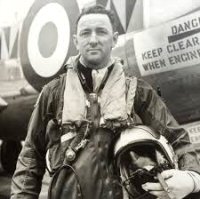  Air Vice-Marshal John Howe CB CBE AFC Our estimated value of this signature : £10 Died : 2016 | Air Vice-Marshal John Howe CB CBE AFC John Howe flew Spitfires, Mustangs and Vampires With the South African Air Force and F-5lD Mustang fighter bombers in the Korean War before joining the RAF 'to fly Hunters'. He commanded the first RAF Lightning squadron when No.74 Sqn converted from Hunters to Lightnings in 1960, and led the famous No.74 Sqn 'Tigers' nine-ship Lightning aerobatic team. He has flown all the legendary USAF 'century series' fighters, and later commanded the F-4 Phantom OCU and RAF Gutersloh. John Frederick George Howe was born in East London, South Africa, on March 26th 1930 and educated at St Andrew's College, Grahamstown. As soon as he left school, he joined the South African Air Force and trained as a pilot. In early 1951 he joined No 2 Squadron, known as the Flying Cheetahs, which was based in South Korea as part of the United Nations forces. The squadron, equipped with the piston-engine Mustang, was heavily engaged in the ground attack role in support of the Army. On June 24th, Howe took off with three others. They responded to an emergency call for air support by a surrounded ground force. In the face of intense anti-aircraft fire, the four Mustangs attacked gun emplacements a number of times. Howe did not expect to survive, but the four aircraft returned to base. All four pilots received US gallantry awards. A month later, Howe was forced to crash land and was rescued by a helicopter. In September, as a 21-year-old second lieutenant, he was the leader of four aircraft instructed to attack enemy troops that were threatening friendly forces. Fierce enemy fire damaged Howe's aircraft but he continued to lead his formation against the target. The US authorities awarded him an immediate DFC, the citation recording: He displayed a standard of leadership above and beyond that normally expected. After completing his flying tour, Howe remained in Korea as a forward air controller before returning to South Africa. At the end of 1954 he travelled to Britain to join the RAF. In April 1956 he joined No 222 (Natal) Squadron flying the Hunter. When a volunteer was required for forward air controller duties with No 3 Commando Brigade in late 1956, Howe's experience in Korea helped to land him the job. He sailed with the Brigade for the ill-fated Suez campaign and, at dawn on November 6th, landed on the beaches at Port Said with No 40 Commando, to direct aircraft on to targets in the area. In the event, the campaign was short-lived. Howe returned to his squadron before joining No 43 Squadron as a flight commander, still flying the Hunter. He was awarded a Queen's Commendation for Valuable Service in the Air, receiving a second two years later. In June 1959 he started training to take command of his Lightning squadron. Howe remained in the fighter business, including a tour of duty with the USAF which gave him an opportunity to fly the latest American fighters, including the Phantom. He has flown all the legendary USAF 'century series' fighters. In 1968 he was appointed to command the RAF's operational conversion unit that saw the introduction of the Phantom into RAF service, his unit being responsible for the conversion of the first squadron crews. After a staff tour he became the station commander of RAF Gutersloh, the home of two Lightning squadrons and a support helicopter squadron. His fighter squadrons, based a few minutes' flying time from the border with Warsaw Pact forces, mounted a continuous quick-reaction capability. He rarely missed an opportunity to maintain his fighter pilot proficiency. After attending the Royal College of Defence Studies he served at HQ 11 (Fighter) Group, and on promotion to air commodore was appointed the commandant of the Royal Observer Corps (ROC). The organisation had a fine record, but Howe justifiably believed that it was in need of modernisation and a more robust attitude. With his usual, not always popular, vigour, he set about applying the same exacting standards to the ROC that he did to his flying. By the time he left in 1980, the efficiency of the Corps had risen sharply. In May 1980 he was appointed the air officer commanding the Southern Maritime Region, a departure from his previous fighter experience and where his usual forceful approach was much in evidence. His final appointment in the RAF was the dual role of Commandant General RAF Regiment and Provost Marshal of the RAF. He retired in November 1985. He was appointed CB (1985) and CBE (1978). Air Vice-Marshal John Howe died January 27th 2016. |
 Brigadier General Zvi Kanor Our estimated value of this signature : £10 | Brigadier General Zvi Kanor Officially credited with at least 2 victoires in the F-4, he scored 119 Squadron's first ever victory in the Phantom. |
Major Daniel L Lafferty Our estimated value of this signature : £25 | Major Daniel L Lafferty Dan Lafferty flew in F-4 Phantoms out of Ubon in Thailand during the Vietnam war, and was part of the first bombing mission against a North Vietnamese airfield. Dan Lafferty flew as back-seater to Robin Olds on the low level strike against the steel mill at Thai Nguyen. Finishing his tour in Vietnam in August 1967, with a MiG to his credit he remained in the Air Force and retired in 1985. |
Air Vice-Marshal Eric Macey Our estimated value of this signature : £15 | Air Vice-Marshal Eric Macey Eric Macey joined the RAF in 1954 and, after graduating as a pilot, flew Hunter fighters with 263 and 1 Sqns. He next joined the rapidly-expanding V-Force, initially flying Valiants of 214 Sqn on in-flight refuelling trials, and completed the first non-stop flight to Singapore. Then followed a Vulcan captaincy with 101 Sqn on which, over the next several years, he served as Sqn Pilot, Training Officer and Sqn Cdr (and which formed part of his Wing when he was OC Waddington). Between times, he was Chief Instructor of the Vulcan OCU at Scampton and, for a short time, also Stn Cdr there. Posted to Germany in 1979, he flew the Wessex, Puma, Jaguar, Phantom and Harrier and later served as AOC (of the University Air Squadrons) and Commandant of the RAF College Cranwell where he re-qualified on the Jet Provost. His final tour as Director-General Training added another 15 aircraft types bringing his total flying hours to about 3400 (1900 on the Vulcan) and total types flown to 60. |
  Air Marshal Ian Macfadyen Our estimated value of this signature : £25 | Air Marshal Ian Macfadyen Ian MacFadyen joined the RAF College Cranwell in 1960. His first flying tour was on the Lightning in England and Germany. He returned to Cranwell in 1970 as a flying instructor where he was, for two years, a member of The Poachers formation aerobatic team. He next flew with Treble One squadron as it reformed with the Phantom in 1974, and became the RAF solo aerobatic pilot on the Phantom whilst with 43 Squadron. He later commanded 29 Squadron and became the first pilot to fly a Phantom into the Falkland Islands, where he also commanded 23 Squadron. In the mid 1980s he was the Station Commander at RAF Leuchars where, at its peak, the station had 66 Phantoms. His final years in the RAF were spent largely in Saudi Arabia, before becoming the Lieutenant Governor of the Isle of Man. He still flies Air Cadets with no 3 AEF at Colerne, and is the National President of the Royal British Legion. |
  Captain John Madden Our estimated value of this signature : £20 | Captain John Madden Flying his first combat mission on 5th October 1965, leading fighter pilot John Madden flew three combat tours in Vietnam, notching up an impressive record of 3 kills and 1 damaged, flying F-4 Phantoms. On 28th August 1972 he was part of the same mission when Steve Ritchie made Ace status. That same year Madden led over 50 combat flights and he never lost a wingman. Flights under his leadership accounted for 5 enemy aircraft downed, and 1 damaged. He left Vietnam in 1975, and retired from the USAF in 1984. On Sept. 9, DeBellevue was flying with Capt. John Madden Jr. when they were making a turn to withdraw following an encounter with a lone MiG. That's when two MiG-19s swarmed in for an attack. 'We acquired the MiGs on radar and positioned as we picked up on them visually,' DeBellevue recalled later. 'We used a slicing low-speed yo-yo to position behind the MiG-19s and started turning hard with them. We fired one AIM-9 missile, which detonated 25 feet from one of the MiG-19s. We then switched the attack to the other MiG-19 and one turn later we fired an AIM-9 at him. I observed the missile impact the tail of the MiG. The MiG continued normally for the next few seconds, then began a slow roll and spiraled downward, impacting the ground with a large fireball. Our altitude was approximately 1,500 feet at the moment of the MiG's impact.' Madden and DeBellevue returned to their base thinking they had destroyed only the second MiG-19. An investigation, aided by the testimony of another aircrew, revealed that they were the only aircrew to shoot another MiG-19 which crashed and burned on the runway at Phuc Yen that day. DeBellevue was asked how he felt about becoming an ace. 'I feel pretty good about it. It's the high point of my career,' he said at the time. 'There's no other job that you have to put out as much for. It's frustrating, and yet when you do shoot down a MiG, it's so rewarding.' |
 Colonel Naftali Maimo Our estimated value of this signature : £10 | Colonel Naftali Maimo Scoring 3 victories in the F-4, he received the Distinguished Service Medal, Israel's second highest award for his actions during the Tanta mission and later commanded an A-4 unit in the Lebanon war. |
 Brigadier General Amir Nachumi Our estimated value of this signature : £10 | Brigadier General Amir Nachumi One of the IAFs foremost Aces with 14 victories, 7 in the F-4 Phantom and 7 in the F-16. His notable missions include 4 MiG kills on his first combat mission on the opening day of the Yom Kippur war and Operation Opera, the F-16 strike on an Iraqi nuclear reactor. |
Air Marshal Sir John Nicholls KCB CBE DFC AFC Our estimated value of this signature : £30 Died : 2007 | Air Marshal Sir John Nicholls KCB CBE DFC AFC A Korean war veteran with 2 MiG kills in F-86 Sabres, in April 1952 Nicholls was sent to the US to convert to the F-86 Sabre before joining a USAF squadron in Korea. He was assigned to the 335th Fighter Interceptor Squadron operating from Kimpo airfield near Seoul and over the next six months he completed 100 operations On June 28th 1952 John Nicholls flew his first sortie, he flew every day and soon built up his experience. Two months later he was credited with damaging two MiGs on one sortie. He set one on fire before it disappeared into cloud and the other was seen damaged and with a lot of smoke as it made its escape across the Yalu River, an area Allied pilots were forbidden to fly over. On his 99th and penultimate operation, John Nicholls was a wingman to the Wing leader when they intercepted four MiGs just south of the Yalu. Nicholls chased one of the MiGs for some time and fired his cannons, scoring hits on the enemy fighter, which broke up and crashed. It was the first MiG to be shot down by an RAF pilot. On December 9th John Nicholls flew his last sortie in Korea and shortly afterwards was awarded a DFC to add to an American DFC and Air Medal. John Nicholls has flown every great fighter from the Spitfire to the Phantom, including the USAF century series. On his return to the RAF, Nicholls continued his career as a fighter pilot flying Meteors and Hunters before becoming a tactics instructor at the prestigious Day Fighter Leader's School. In 1959 he was attached to English Electric as RAF project test pilot on Lightnings. He commanded AFDS at RAF Binbrook where in 1963 Lightning vs Spitfire combat trials were flown and later, he commanded RAF Leuchars. He retired as Vice Chief of the Air Staff to become Director in charge, BAe Lightnings in Saudi Arabia. John Nicholls was appointed CBE (1967) and KCB (1978). Sadly, he died 17th May 2007, aged 80. |
  Brigadier General Robin Olds Our estimated value of this signature : £60 Died : 2007 | Brigadier General Robin Olds After leaving West Point in June 1943, Robin Olds was posted to the 479th Fighter Group in England, joining 434 Squadron. Based at Wattisham in East Anglia, and flying P-38s, he was involved in heavy bomber escort duties and fighter sweeps until the Normandy invasion, soon after which his Squadron converted to P51 Mustangs. by early 1945 Robin Olds was in command of 434 Squadron taking part in the Battle of the Bulge, flying escort missions, and providing air support to the airborne attack across the Rhine. At the end of World War II Robin Olds had 24.5 victories, of which 13 were in the air. Later in Vietnam Robin Olds gained four more victories, flying F4 Phantoms and flew with the 8th Tactical Fighter Wing. Sadly, Robin Olds passed away on 14th June 2007. |
 Colonel Eitan Peled Our estimated value of this signature : £10 | Colonel Eitan Peled An Ace with at least 6 victories, all in the F-4 Phantom, he was the fourth Israeli pilot to reach Ace status while flying the F-4. |
 Sqn Ldr John Pemberton Our estimated value of this signature : £35 | Sqn Ldr John Pemberton Also known as Zbysek Necas, Czechoslovakian 'Nicky' joined 68 Squadron as a Navigator and flew Mosquitos as night time defence over the British mainland, accounting for 3 German aircraft. Post War he flew Lightnings and Phantoms in the Cold War against the Russians. |
Colonel Manfred Rietsch Our estimated value of this signature : £45 | Colonel Manfred Rietsch Manfred Rietsch joined the U.S. Marine Corps in 1966, later joining VMFA-513 in Vietnam. Flying the F-4 Phantom he had his first combat in 1968, and by the end of his tour had flown 653 combat missions - more than any other F-4 pilot in Vietnam. He became the first Marine instructor at Top Gun in 1973, and more recently flew 66 combat missions in the F/A-18 during Desert Storm. In all he has 7000 hours in tactical jets. |
  Brigadier General Richard Steve Ritchie Our estimated value of this signature : £25 | Brigadier General Richard Steve Ritchie Born in June 1942 during World War Two, Steve Ritchie graduated and was commissioned from the USAF Academy in June 1964. He flew his first combat tour in Vietnam in 1968 on Fast FAC operations, before transferring to the 555th Tactical Fighter Squadron, 432nd Tactical Reconnaissance Wing for his second tour. It was with the 555th TFS - the famed 'Triple Nickel' Squadron, that he achieved Ace status. His first kill came on 10th May 1972 when he downed a MiG-21 forty miles south west of Hanoi, with his second a few weeks later just thirty miles south of the Chinese border. At the beginning of July he downed two MiG-21s west of Hanoi. It must have been his lucky area for on 28th August he scored his fifth and final victory in the same spot, thus becoming the only pilot Ace of the Vietnam War in the USAF, and the last US pilot to achieve Ace status. |
 Lieutenant Colonel Don Ross Our estimated value of this signature : £30 | Lieutenant Colonel Don Ross Don Ross flew Spitfire Vbs with the second American Eagle Squadron, 121 Squadron. By the time the squadron transferred to the 357th Fighter Group in September 1942 he had already completed 72 combat sorties. Shot down in February 1944 he became a POW until May 1945. He flew combat in Korea, and then F-4 Phantoms in Vietnam. |
 Colonel Dani Shaki Our estimated value of this signature : £10 | Colonel Dani Shaki He scored 3 victories in the F-4 Phantom over Egyptian MiGs, all on his first combat mission when he and Amir Nachumi were the first two aircraft to scramble as the Yom Kippur war broke out. |
 Major Meir Shani Our estimated value of this signature : £10 | Major Meir Shani He flew Phantoms with Abraham Ashael as his back seater and both were later shot down becoming PoWs. |
 Brigadier General Iftach Spector Our estimated value of this signature : £20 | Brigadier General Iftach Spector a Double Ace with a minimum of 12 victories, at least 8 in the Mirage and 4 in the Phantom. |
Squadron Leader Grant T Taylor Our estimated value of this signature : £20 | Squadron Leader Grant T Taylor Joined the Air Force in 1960 as an Apprentice at RAF Locking and then as a Cadet at RAF College Cranwell. Initially served as a QFI at RAF Syerston before converting to Hunters as a Fighter Reconnaissance pilot on 8 Sqn in Bahrain. In 1971 he converted to Lightning's serving as a QFI/IRE on 23 Sqn at RAF Leuchars. In 1975 he converted to the Phantom and served a tour on 29 Sqn RAF Coningsby as QFI/IRE before taking up post on the Phantom OCU until 1986. During this period he also flew the Spitfire and Hurricane aircraft of the Battle of Britain Memorial Flight for four years. In 1986 he flew BAC 167 aircraft at the King Feisal Air Academy in Saudi Arabia returning to UK in 1988 to train flying instructors on Jet Provost and Tucano aircraft at the Central Flying School at RAF Scampton. In 1990 he was posted to the Central Flying School Exam Wing as a Basic and Advanced Command Examiner and Command IRE on Hawks, Jet Provost and Tucano aircraft. He served his last tour on 55 Sqn at RAF Cranwell flying the Dominie (HS125). In 1997 he retired from the RAF to become an Aviation Officer and continued to fly the Dominie until 2003. He then joined the instructional staff at the Hawk Synthetic Training Facility at RAF Valley. He has a total of 9500 hours. |
Colonel Eli Tovel Our estimated value of this signature : £10 | Colonel Eli Tovel Whilst flying as back seater on Phantoms he was on one occasion shot down by enemy fire and forced to eject, but was later recovered. |
Chuck Townsend Our estimated value of this signature : £40 Died : 2020 | Chuck Townsend Chuck Townsend was born on July 10, 1942 in San Diego, California. Chuck's Dad was a naval officer, and he got to see the likes of Ft Collins, Colorado, Lincoln, Nebraska, before graduating from High School in Salt Lake City, Utah. Chuck attended Colorado State University and participated in the Air Force ROTC program. In 1962 Chuck earned a private pilot's license, and following graduation he attended Air Force Flight School at Williams AFB. He earned his wings at Williams (Class 6613) and was sent to MacDill AF13 for advanced fighter training school. As an F-4 Phantom II pilot Chuck spent 8 months in Vietnam - flying a total of 135 combat missions. He served with the 8th Tactical Fighter Wing under the command of Robin Olds, and was based in Ubon, Thailand. Chuck was awarded 13 Air Medals and two Distinguished Flying Crosses while in Vietnam. In late 1967 he returned to the States where he learned to fly the F-106. He was assigned to the Air Defense Command, and was stationed at Selfridge Field, Michigan as part of the 94th Squadron, which traces its roots back to Eddie Rickenbacker. Following the Pueblo incident, Chuck's unit was moved to Korea for six months. Later he would return to Michigan at Wordsmith AFB. Tiring of the harsh winters in northern Michigan, Chuck moved south to Tyndall AFB where he became an instructor in the F-106 for a period of three years. From 1973-1988 he served with the Air National Guard at Otis AFB, Massachusetts. As a Flight Commander, Chuck was involved in scheduling, training, instructing, and pilot evaluation. Known as Mr. 106, Chuck flew the F-106 for twenty years, accumulating the amazing total of 4410.6 hours in the aircraft. After retiring from the Air Force he joined Midway Airlines, and later United. At the latter airline Chuck has commanded 727s, 737-300s, and currently 767s and 757s. Chuck resides on Cape Cod with his wife of 18 years, the former Kathleen Falk. Chuck has two children from a prior marriage. We have learned that Chuck Townsend died in 2020. |
  Flt Lt Pete Underwood Our estimated value of this signature : £25 | Flt Lt Pete Underwood Pete Underwood joined the RAF Officer Training College Cranwell in 1980. His first operational tour was from 1984 to 1986 on the Phantom FGR2, 19 Squadron, RAF Wildenrath in Germany. He was detached to No.23 Sqn for a 6-month duty in the Falkland Islands during this tour. His second operational tour was from 1986 to 1989 on the Phantom FG1, 111 Sqn, RAF Leuchars. After this tour he was posted to RAF Brawdy as a Tactics and Weapons Instructor on the Hawk TMk1. When RAF Brawdy closed he moved on to RAF Chivenor as OC Weapons Instruction Flight on the Hawk TMk1. He now flies as Captain on the Airbus A320/321 with Monarch Airlines Ltd. |
 Capt E Royce Williams USN Our estimated value of this signature : £55 | Capt E Royce Williams USN Royce Williams was born in Wilmot, South Dakota in 1925. In 1936 his family moved to Clinton, Minnesota where a familyowned grocery business was established. Royee worked in the business, but preferred outside work including activities at his Uncle's farm and lakeside resort. He was active in the 411 club and the Boy Scouts, and became the first young man from Clinton to attain Eagle Scout status. In high school Royce played three sports, including quarterback on his school's football team. He graduated first in his class. Royce had boyhood dreams of becoming a military pilot. His older brother had Joined the Navy in 1942, becoming a Marine Corps aviator. In March of 1943 Royce Joined up, and he became a naval aviator. Royce became carrier qualified in the F6F Hellcat on the old USS Ranger (CV-4.) He flew the F6F, and later the F4U Corsair and the F8F Bearcat. Royce attended the University of Minnesota where he earned his Bachelors Degree. He later would attend the Navy Postgraduate School in Monterey. Royee eventually transitioned to jets, where his first operational deployment was on board the USSOriskany, flyingthe17917-5 Panther. While deployed in Korea with the VF-781 (later redesignated V17-121) 'Pacemakers', Royee engaged seven Soviet-piloted Mig-15s on November 18, 1952. The Oriskany was only 100 miles from V1adivostok. Shortly after take-off Williain's flight of four Panthers encountered the seven Migs. Royce was instructed to reverse course and hold a barrier between the Migs and the Task Force, but the Migs attacked. It is believed that Royce downed three of the bogies, although official reports credited him with only one. With his Panther badly shot-up R oyce limped back to the Oriskany and got his aircraft home with the help of the LSO and ship's Captain. The engagement was politically sensitive as the US Government feared escalating Soviet involvement in the War in Korea. Mig kills were rare for the Navy in Korea (only 55 aerial victories), and the Panther was generally outclassed by the Mig-15 in most dogfights. Royce remained in the Navy until his retirement in 1980. He served as an exchange pilot with the USAF flying the F-86 and F-100. He also served as CO, XO and of VF-33 on board the USS Enterprise flying the F8-E Crusader, and later on board the USS America flying the F-4 Phantom 11. He also served as an Air Wing Commander during the Vietnam War. He also served as CO of the USS Eldorado, with CINCPAC Staff as COS ConiFAITWestPac, and as ACOS OPS ComTracPac. Royce's decorations include the Silver Star, the Legion of Merit with Combat 'V', the Distinguished Flying Cross, and the Bronze Star Medal. He married his hometown sweetheart, Cam, in 1947. In 2023, at the age of 97, he received the Navy's second-highest award for combat valor, the Navy Cross, at the San Diego Air and Space Museum. His award was upgraded from the Silver Star after a campaign entitled 'Operation Just Reward'. |
Air Marshal Sir William Wratten KBE, CB, AFC, FRAeS Our estimated value of this signature : £40 | Air Marshal Sir William Wratten KBE, CB, AFC, FRAeS Air Marshal Wratten joined the RAF as a Cranwell Cadet, graduating in December 1960. He completed the CFS course the following year and went on to instruct as a first-tour QFI on Vampire T11s at Oakington and Swinderby. The Air Marshal converted onto Lightning at Middleton-St-George in 1963 before serving on 19 Squadron from 1964 to 1968, first at Leconfield and later Gutersloh. In 1968 Air Marshal Wratten converted to Phantoms at Davis-Monthan AFB, USA, and then instructed on 288 (Phantom) OCU from 1968 to 1970. He was posted in 1971 as Flight Commander on 17 Squadron at RAF Bruggen, operating the Phantom in the Strike / Attack role. Returning to the UK in 1973, he joined the staff on HQ 38 Group before attending the RAF Staff College in 1974. He then joined the OR staff at the Minstry of Defence for a brief spell before being promoted to Wing Commander and, in 1975 taking command of 23 Squadron with the Phantom in AD role. On completing his tour as Officer Commanding 23 Squadron, Air Marshal Wratten was posted to the Air Secretarys staff at Barnwood before being promoted to Group Captain in 1980 and taking command of RAF Coningsby. In June 1982 he moved to the Falkland Islands to form and command RAF Stanley. After attending RCDS in 1983, the Air Marshal became one of the two Directors OR (Air) being concerned with future RAF aircraft (except Nimrod AEW) and offensive weapons systems. In September 1986 he was appointed SASO HQ 1 Group, a post he held until becoming AOC 11 Group on 17th March 1989. Between 14th November 1990 and 22nd March 1991, Air Marshal Wratten was detached to HQ British Forces Middle East in Riyadh, Saudi Arabia, where he held the appointments of Air Commander and Deputy British Forces Commander Middle East during the Gulf conflict. In recognition of this service he received a Knighthood in the Operation GRANBY Honours List. On 19th September 1991, Sir William was promoted to Air Marshal prior to taking up his appointment as Director General Saudi Armed Forces Project. |
| Phantom Squadron details |
432nd Tactical Reconnaissance Wing Country : US | 432nd Tactical Reconnaissance Wing Served in Vietnam |
434th Fighter Squadron Country : US | 434th Fighter Squadron Conducted air defense prior to flying duties overseas. Between 26th May 1944 and 25th Apr 1945 flew combat missons over the European Theater of Operations. Received Distinguished Unit Citation (DUC) for performance in aerial conflicts against the enemy on 18th August, 5th and 26th September 1944. Trained as fighter-day, and later, tactical fighter squadron, 1952-1962. In 1966, was reinstated as a squadron and began training F-4 crews for assignment in Southeast Asia. In Aug 1972, deployed to Thailand, where it served under operational control of 49 Tactical Fighter Wing. Engaged in combat over North and South Vietnam in October 1972. Redeployed back the USA. By 1975, provided combat aircrew training for US and Allied pilots. From 1977-1991, trained pilots. The squadron flew P-38 Lightning 1943 - 1944, P-51 Mustang from 1944 to 1945, P-47 Thunderbolt in 1945, F-51 Mustang from 1952 - 1953, F-86 Sabre from 1953 - 1955, F-100 Super Sabre from 1954 - 1959, F-104 Starfighter from 1959 - 1962, F-4 Phantom from 1966 - 1976 and T-38 Talon from 1977 - 1991. |
555th Tactical Fighter Squadron Country : US | 555th Tactical Fighter Squadron Served in Vietnam |
8th Tactical Fighter Wing Country : US | 8th Tactical Fighter Wing Served in Vietnam |
No.111 Sqn RAF Country : UK Known Codes : , JU, TM, | No.111 Sqn RAF Adstantes - Standing by |
No.17 Sqn RAF Country : UK Known Codes : , YB, UT, UV, | No.17 Sqn RAF Excellere contende - Strive to excel |
No.19 Sqn RAF Country : UK Known Codes : , QV, WZ, | No.19 Sqn RAF Possunt quia posse videntur - They can because they think they can |
No.23 Sqn RAAF Country : Australia | No.23 Sqn RAAF |
No.23 Sqn RAF Country : UK The squadron disbanded on 2 October 2009, when it amalgamated with No 8 Squadron. Known Codes : , YP, MS, | No.23 Sqn RAF Semper aggessus - Always having attacked |
No.29 Sqn RAF Country : UK Known Codes : , RQ, YB, RO, | No.29 Sqn RAF Impiger et acer - Energetic and keen |
No.3 Sqn RAF Country : UK Known Codes : , QO, JF, J5, OP, | No.3 Sqn RAF Tertius primus erit - The Third shall be first |
No.43 Sqn RAF Country : UK Known Codes : , FT, NQ, SW, | No.43 Sqn RAF Gloria finis - Glory is the end |
No.54 Sqn RAF Country : UK Known Codes : , KL, DL, HF, | No.54 Sqn RAF Audax omnia perpeti - Boldness to endure anything |
No.892 Sqn FAA Country : UK | No.892 Sqn FAA Fleet Air Arm. First Squadron to fly the Sea Vixen aircraft. |
No.92 Sqn RAF Country : UK Disbanded 1st October 1994 Known Codes : , GR, QJ, DL, 8L, | No.92 Sqn RAF East India Aut pugna aut morere - Either fight or die |
VF-96 Country : US | VF-96 |
VMFA-531 Country : US Disbanded 1992. | VMFA-531 On November 16, 1942 at Marine Corps Air Station in Cherry Point North Carolina VMF -531 Marine Night Fighter Squadron 531 was formed and on January 9, 1943 the squadron became part of the Fleet Marine Force becoming part of Marine Aircraft Group 53 on April 1st 1943 On April 15, 1943 the Japanese started a night attack on Guadalcanal and the group was quickly ordered to deploy to the South Pacific Theatre. VMF(N)-531 was the first combat squadron to leave MCAS Cherry Point and arrived at Banika in the Russell Islands on September 11. Joining marine aircraft group 21 and the 1st marine Aircraft Wing, the Grey Ghosts flew their first combat patrol on September 16th 1943 making them the first naval aviation night-fighter squadron to operate in the South Pacific. The squadron's first kill was made on November 13th, 1943 when Captain Duane Jenkins, stumbled upon a Betty Bomber and shot it down. On May 10, 1965 During the Vietnam War, 15 F-4Bs from the squadron arrived in South Vietnam, at Danang becoming the first land based Marine Corps jets during the War. VMFA-531 immediately began flying bombing missions under radar guidance and standard close support missions in support of Marines who were fighting on the ground. VMFA-531 was known as the "Grey Ghosts”. The Squadron was finally decommissioned on March 27, 1992. |
|
Contact Details |
|
Sign Up To Our Newsletter!
This website is owned by Cranston Fine Arts. Torwood House, Torwoodhill Road, Rhu, Helensburgh, Scotland, G848LE Contact: Tel: (+44) (0) 1436 820269. Email: cranstonorders -at- outlook.com
|
 |





